
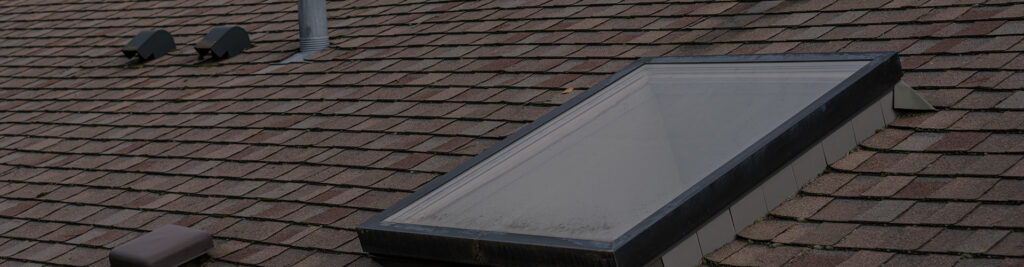
Commercial buildings often have a natural-light problem that is difficult to solve with conventional windows alone. Large floor plates, warehouses, retail units, workshops, offices, institutional buildings, and other commercial properties can contain substantial interior areas positioned far away from exterior walls.
For property owners and managers in Nepean, commercial skylights can provide another way to introduce daylight into these spaces. Rather than relying exclusively on artificial lighting or perimeter windows, professionally planned skylights can distribute natural light from the roof into areas deeper inside a building.
The right solution, however, depends on much more than simply creating openings in the roof. Roof construction, skylight dimensions, glazing, drainage, insulation, condensation management, safety requirements, interior use, daylight distribution, and Ottawa’s demanding seasonal climate all need to be considered.
VELUX Canada offers a dedicated range of commercial skylight products, including commercial domes, curb-mounted systems, wide-span units, and commercial SUN TUNNEL daylighting solutions. (Velux)
For businesses searching for commercial skylights near me, VELUX skylights Canada, VELUX skylight installation, or a VELUX skylight installer near Nepean, understanding the available options is the first step toward developing a daylighting system appropriate for the property.
Why Commercial Properties Can Be Difficult to Daylight
A typical residential room usually has at least one exterior wall.
Commercial buildings can be very different.
A retail property, warehouse, office complex, light-industrial facility, or institutional building may extend a considerable distance from its exterior walls. Even when large windows are installed around the perimeter, daylight may not penetrate effectively into the centre.
This can create interior zones that depend on electric lighting throughout operating hours.
Common examples include:
- Warehouses
- Retail spaces
- Showrooms
- Workshops
- Office buildings
- Commercial corridors
- Storage facilities
- Recreational facilities
- Institutional properties
- Large common areas
Commercial skylights approach the problem from above.
Instead of trying to carry daylight horizontally from the building perimeter, the roof becomes another potential source of natural illumination.
Why Nepean Is Well Suited to Commercial Daylighting
Nepean contains an unusually diverse mix of commercial properties.
Areas surrounding Merivale Road feature retail plazas, standalone businesses, automotive properties, warehouses, offices, restaurants, and light-industrial spaces.
The Colonnade Road and Bentley Avenue areas contain many industrial and commercial buildings with substantial roof areas.
Closer to Hunt Club Road, Baseline Road, Woodroffe Avenue, and the Queensway, property types and building ages vary even further.
These differences matter because a skylight solution suitable for a small commercial office may be completely inappropriate for a large warehouse.
A professional assessment should therefore start with the building rather than the product.
What Are Commercial Skylights?
Commercial skylights are roof-mounted daylighting products designed for the demands of non-residential buildings.
They may be installed individually or as part of a larger daylighting strategy.
Depending on the project, commercial solutions can include:
- Fixed skylights
- Dome skylights
- Curb-mounted skylights
- Large-span skylights
- Commercial sun tunnels
- Custom-size units
- Ventilation configurations
- Daylighting systems with diffusing glazing
VELUX states that its commercial range is designed to provide flexibility for daylight, natural ventilation, smoke and heat exhaust ventilation, and maintenance access, depending on the specific product and project. (Velux)
The appropriate system therefore depends heavily on how the building is used.
Commercial Skylights vs Residential Skylights
Residential and commercial skylights share the fundamental purpose of bringing daylight through the roof, but the applications can differ significantly.
Commercial buildings may have:
- Larger roof areas
- Flatter roof systems
- Greater ceiling heights
- Larger interior floor areas
- Different structural systems
- Different insulation assemblies
- Different drainage requirements
- Specialized safety requirements
- Different ventilation requirements
A commercial project may also require many skylights positioned across a large roof rather than one or two units serving individual rooms.
This is why businesses searching for residential skylights near me and property managers searching for commercial skylight installation are not necessarily looking for the same solution.
VELUX Commercial Skylight Options
VELUX Canada’s current commercial range includes several different approaches to overhead daylighting.
Understanding these categories helps property owners see why commercial skylight planning should be customized.
Dynamic Dome Skylights
Commercial dome skylights can be appropriate for buildings with large roof areas and interior spaces requiring diffused daylight.
VELUX’s Dynamic Dome is specifically engineered for commercial daylighting and includes features related to light transmission, diffusion, thermal separation, and moisture management. (Velux)
Diffusion can be especially valuable in commercial interiors.
Instead of creating a concentrated patch of direct sunlight, diffusing skylights can distribute light more evenly throughout the area below.
That can be useful in warehouses, retail environments, workshops, and other large spaces.
Curb-Mounted Commercial Skylights
Curb-mounted skylights sit over a raised curb constructed as part of the roof assembly.
This type of installation is common in commercial applications, particularly on low-slope roofs.
VELUX’s commercial curb-mounted fixed skylights are available in numerous configurations, including custom sizing in quarter-inch increments. The company also offers factory-insulated curb options in multiple heights and materials. (Velux)
That flexibility can be useful when dealing with an existing commercial opening or a project with specific architectural requirements.
Large-Span Commercial Skylights
Some commercial properties need something more substantial than a conventional unit skylight.
VELUX’s SkyMax, for example, is a large-span flat-glass unit designed to provide up to 35 square feet of glazing, with a maximum dimension of up to 10 feet. (Velux)
Large-span products may be considered for spaces where the skylight itself is intended to become an architectural feature.
Potential applications can include:
- Commercial entrances
- Reception areas
- Showrooms
- Restaurants
- Office common areas
- Public spaces
- High-ceiling interiors
These projects require careful consideration of structure, roof configuration, interior use, and daylight control.
Commercial Sun Tunnels
A conventional skylight is not the only way to introduce daylight through a commercial roof.
Commercial SUN TUNNEL systems can transfer daylight through a highly reflective tube into the occupied area below.
VELUX specifically identifies schools, retail environments, and warehouses as potential applications for its commercial SUN TUNNEL systems, particularly on flat or low-slope commercial roofs. (Velux)
This can be useful when the goal is functional daylighting rather than creating a direct view through the roof.
Where Commercial Sun Tunnels Can Work Well
Consider a Nepean commercial building with offices located beneath a larger roof.
A conventional skylight could potentially work, but there may be considerable space between the roof deck and finished ceiling.
A commercial sun tunnel can provide a pathway for daylight between those two points.
Possible applications include:
- Interior offices
- Corridors
- Washrooms
- Staff rooms
- Retail areas
- Storage spaces
- Reception areas
- Commercial workspaces
VELUX’s commercial systems use highly reflective silver tunnel surfaces designed to transfer daylight from the roof into the space below. (Velux)
Commercial Skylights for Nepean Warehouses
Warehouses are among the clearest examples of where overhead daylight can be useful.
A large warehouse may have hundreds or thousands of square feet of roof area while relatively few exterior windows serve the centre of the building.
Strategically distributed skylights can introduce daylight across a much larger portion of the floor.
The design needs to consider:
- Racking locations
- Work zones
- Ceiling height
- Roof structure
- Mechanical equipment
- Artificial lighting
- Skylight spacing
- Glare
- Daylight diffusion
- Roof drainage
The objective should not simply be installing the maximum number of skylights.
The goal is useful daylight distribution.
Skylights for Retail Properties
Retail spaces have different priorities.
Natural light can contribute to the overall atmosphere of a store, showroom, or customer-facing environment, but uncontrolled direct sunlight can also create glare.
That makes diffusion and placement important.
Commercial skylights may be positioned over:
- Main retail floors
- Customer circulation areas
- Display areas
- Entrances
- Food-service seating
- Showrooms
The skylight layout should be coordinated with merchandise displays, shelving, artificial lighting, and interior finishes.
Skylights for Commercial Offices
Office buildings may also benefit from overhead daylight.
Interior workspaces located far from perimeter windows are a common challenge in deeper commercial floor plans.
Depending on roof access and building configuration, skylights or tubular daylighting systems can introduce natural light into:
- Open workspaces
- Meeting areas
- Corridors
- Reception areas
- Break rooms
- Shared spaces
The design should carefully consider glare, computer screens, workstation placement, and occupant comfort.
More daylight is not automatically better if it is poorly controlled.
Daylighting and Artificial Lighting
One of the most interesting commercial applications for skylights is reducing daytime dependence on electric lighting.
VELUX notes that properly designed commercial daylighting can allow electric lights to remain off for significant portions of operating hours. Its commercial sustainability guidance describes skylight-to-floor ratios in the range of roughly 4–6% as typical in properly designed skylit buildings, although actual design requirements depend on the specific building and project. (Velux)
This should not be interpreted as a universal formula.
A warehouse and an office have completely different lighting requirements.
Roof orientation, glazing, ceiling height, skylight spacing, interior reflectance, building use, and available daylight all influence the result.
Why Diffused Daylight Matters
Direct sunlight can be beautiful in the right setting, but large commercial interiors often benefit from more evenly distributed illumination.
VELUX’s commercial products include glazing options intended to diffuse daylight and reduce concentrated glare. (Velux)
Imagine a warehouse with bright pools of direct sunlight surrounded by darker areas.
Employees’ eyes continually need to adjust between brightness levels.
A properly designed diffusing skylight system can help create a more consistent daylight environment.
That is particularly useful where visual tasks occur throughout the floor area.
Commercial Skylight Replacement in Nepean
Nepean contains many commercial properties that have been operating for decades.
Some already have older dome skylights or other roof daylighting systems.
Signs that existing commercial skylights deserve professional evaluation can include:
- Visible cracks
- Discolouration
- Persistent leaks
- Damaged frames
- Failed seals
- Recurring condensation
- Interior water staining
- Deteriorated curbs
- Previous temporary repairs
- Changes to surrounding roofing
An older skylight does not automatically need replacement simply because of its age.
Its actual condition and compatibility with the current roofing system should be assessed.
Replacing Skylights During Commercial Reroofing
Commercial reroofing is an excellent time to inspect existing skylights.
Roofing contractors may already be removing or modifying materials around the skylight curbs.
If the skylights are approaching the point where replacement is likely, coordinating both projects can reduce the likelihood of disturbing newly completed roofing later.
VELUX also provides dedicated commercial installation documentation and technical resources for architects, contractors, and project professionals. (Velux)
Planning should therefore begin before reroofing work reaches the skylight openings.
Commercial Skylights on Flat Roofs
Many commercial properties in Nepean use flat or low-slope roofing systems.
These roofs require a different installation approach from a typical steep-slope residential asphalt roof.
Important considerations can include:
- Curb height
- Roof membrane
- Drainage
- Insulation
- Waterproofing
- Snow accumulation
- Roof-mounted mechanical equipment
- Access pathways
Curb-mounted commercial skylights are particularly relevant in these applications because the raised curb helps integrate the unit into the roof assembly.
VELUX provides several insulated commercial curb configurations, with different available heights and construction materials. (Velux)
Ottawa Weather Changes the Equation
Commercial skylights in Nepean need to perform through Ottawa’s full seasonal cycle.
That includes:
- Heavy rain
- Snow accumulation
- Freezing temperatures
- Ice
- Freeze-thaw cycles
- Summer heat
- Wind
- Rapid temperature changes
Water management therefore deserves as much attention as daylight.
The skylight, curb, roof membrane, insulation, drainage, and surrounding roof system all need to function together.
A commercial skylight should never be treated as an isolated component sitting on top of the roof.
Condensation Management
Condensation is another important consideration for commercial skylights.
Warm, humid interior air can interact with cold exterior conditions during an Ottawa winter.
Commercial buildings can also generate different amounts of indoor humidity depending on their use.
VELUX’s redesigned commercial curb-mounted products include thermally broken frame designs and active condensation-management features, while Dynamic Dome products incorporate systems designed to direct moisture toward the exterior. (Velux)
Product selection, however, is only one part of condensation management.
Building use, ventilation, indoor humidity, insulation, air sealing, and installation details also matter.
Commercial Skylight Safety
Safety should be considered early in commercial skylight planning.
Commercial roofs may be accessed by:
- Maintenance personnel
- HVAC technicians
- Roofing contractors
- Electricians
- Building inspectors
- Other service providers
VELUX lists fall-protection accessories for its Dynamic Dome commercial products, including exterior safety screens, interior screens, and safety bars. (Velux)
The appropriate safety provisions depend on the building, roof access, applicable requirements, and project design.
These questions should be addressed during planning rather than after installation.
What About Commercial Building Codes?
Commercial skylight projects can involve building-code and energy-efficiency considerations that differ from residential projects.
Canada’s National Energy Code for Buildings addresses energy-efficient design of building envelopes, including roofs, fenestration, and skylight area. (National Research Council Canada)
Local requirements and the applicable code edition should always be confirmed for the specific project.
Depending on the scope of work, permits, engineering, architectural documentation, or other professional involvement may also be necessary.
A skylight installer should not simply assume that every commercial roof opening can be approached in the same way.
Custom Commercial Skylight Sizes
Existing commercial buildings do not always have standard-size openings.
This is particularly relevant when replacing older skylights.
VELUX’s traditional commercial dome line offers custom dimensions, including sizing in quarter-inch increments, while its commercial curb-mounted range also supports custom applications. (Velux)
This flexibility can be valuable when adapting a replacement to an existing curb.
However, measurements need to be precise.
The condition of the curb itself also needs to be evaluated rather than assuming it can automatically be reused.
Should an Existing Skylight Curb Be Reused?
Sometimes.
An existing curb may remain structurally sound and compatible with a replacement skylight.
In other situations, deterioration, dimensions, insulation, height, waterproofing, or roof changes may make modification or replacement more appropriate.
An inspection should examine:
- Curb dimensions
- Curb condition
- Structural integrity
- Existing insulation
- Membrane connection
- Evidence of moisture
- Flashing details
- Compatibility with the proposed skylight
The goal should be a complete, durable roof integration rather than simply fitting a new skylight over an old opening.
How Many Skylights Does a Commercial Building Need?
This is one of the most important questions—and one that cannot be answered simply by looking at the building’s square footage.
Designers should consider:
- Total floor area
- Ceiling height
- Building use
- Roof geometry
- Skylight type
- Visible light transmission
- Diffusion
- Interior reflectance
- Existing windows
- Artificial lighting
- Workstation or storage layouts
- Desired daylight level
VELUX provides technical specifications, drawings, BIM resources, and commercial daylighting information to support project planning. (Velux)
A professional commercial project should use these factors to determine an appropriate layout.
Commercial Skylight Installation Cost
Businesses searching for commercial skylights near me cost, VELUX skylight price, or commercial skylight installation cost in Ottawa should be cautious about generic pricing.
Commercial projects vary dramatically.
Cost can depend on:
- Number of skylights
- Skylight dimensions
- Product type
- Custom sizing
- Glazing
- Curb requirements
- Roof membrane
- Roof height
- Access requirements
- Equipment requirements
- Interior ceiling construction
- Structural modifications
- Safety systems
- Removal of existing units
- Disposal
- Interior finishing
Installing one replacement unit on an accessible low-rise property is fundamentally different from installing a complete daylighting system across a large commercial roof.
A site assessment is therefore essential for meaningful pricing.
Commercial Skylights for Merivale Road Properties
The Merivale Road corridor contains a particularly diverse collection of commercial buildings.
Retail plazas, showrooms, automotive properties, offices, restaurants, warehouses, and service businesses can all have different daylighting requirements.
A retail property may prioritize comfortable customer-facing daylight.
A warehouse may prioritize broad, diffused illumination across working areas.
An office may need careful glare management.
Even buildings located beside one another can therefore require completely different skylight strategies.
Commercial Skylights Around Colonnade Road
The Colonnade Road area includes numerous industrial and commercial buildings with substantial roof surfaces.
Properties of this type can be strong candidates for roof-level daylighting because exterior windows may have limited ability to illuminate the centre of the floor plate.
Commercial dome skylights or SUN TUNNEL systems may be considered depending on the building configuration and daylight objectives.
Roof-mounted HVAC equipment, drainage, structural bays, and interior layouts should all be mapped before determining skylight positions.
Commercial Properties Near Hunt Club and Baseline
Commercial buildings around Hunt Club Road and Baseline Road also vary widely in use and age.
Some properties may already contain older skylights that need assessment during reroofing.
Others may be undergoing renovations where daylighting can be incorporated into the new design.
Rather than adding skylights after every other renovation decision has been made, property owners can benefit from considering daylight during the initial planning stage.
This allows skylight locations to be coordinated with interior walls, lighting systems, ceiling layouts, and building services.
Can Commercial Skylights Provide Ventilation?
Some commercial skylight systems can be incorporated into projects requiring ventilation, depending on the product and application.
VELUX states that its commercial range includes solutions for natural ventilation as well as daylight, smoke and heat exhaust ventilation, and maintenance access. (Velux)
These are specialized functions.
They should not be assumed to apply to every commercial skylight model or building.
Where ventilation or life-safety functionality is required, the system needs to be designed specifically for that purpose and coordinated with applicable building requirements.
Commercial Skylights and Renovations
A major commercial renovation is an ideal opportunity to rethink how the building uses daylight.
If ceilings, lighting, roofing, mechanical systems, or interior partitions are already changing, skylight locations can be planned alongside those elements.
This can help avoid conflicts with:
- HVAC equipment
- Sprinkler systems
- Electrical systems
- Suspended ceilings
- Structural members
- Storage racks
- Interior walls
Integrated planning is particularly important in existing buildings where the roof space may already be crowded with equipment.
Why Professional Commercial Skylight Installation Matters
Commercial skylight installation is not simply residential installation performed on a larger scale.
A commercial roof may involve different membranes, curbs, drainage conditions, access procedures, safety requirements, insulation assemblies, and structural considerations.
VELUX maintains separate installation instructions and professional technical documentation specifically for commercial products. (Velux)
Professional installation should therefore account for the complete roof system.
That includes both keeping water out and achieving the intended daylighting performance.
Questions Nepean Property Owners Should Ask
Before moving ahead with a commercial skylight project, owners and facility managers should consider:
- What areas need more daylight?
- What type of commercial roof is installed?
- How old is the roofing system?
- Are existing skylights being replaced?
- What condition are existing curbs in?
- Is the goal daylight, ventilation, or both?
- Would skylights or commercial sun tunnels work better?
- How should glare be controlled?
- Are custom dimensions required?
- How will skylights affect roof drainage?
- Are fall-protection measures required?
- Is reroofing planned?
- Are permits or professional drawings required?
- How will skylights interact with HVAC equipment?
- How will daylight work with existing electric lighting?
Answering these questions early can prevent skylights from becoming isolated additions to an otherwise carefully designed commercial building.
Finding a Commercial Skylight Installer Near Nepean
Searches for a commercial skylight installer near me, VELUX skylight installer near Nepean, commercial skylights Ottawa, or VELUX skylights Canada generally indicate that a property owner is moving from initial research toward project planning.
At this stage, the building itself should become the focus.
The roof needs to be inspected. Existing openings and curbs need to be measured. Interior daylight requirements need to be understood. Roofing materials, structural conditions, drainage, and access need to be considered.
Only then can an appropriate skylight solution be selected.
Bringing More Natural Light Into Nepean Businesses
Commercial skylights can do much more than create a brighter spot underneath a roof opening.
When they are properly planned, skylights can become part of a broader daylighting strategy for warehouses, retail properties, offices, workshops, institutional facilities, and other commercial spaces.
VELUX currently offers commercial curb-mounted skylights, dome products, large-span options, and commercial SUN TUNNEL systems, giving property owners multiple approaches depending on building design and daylighting requirements. (Velux)
For Nepean properties around Merivale Road, Colonnade Road, Hunt Club Road, Baseline Road, Woodroffe Avenue, and surrounding commercial districts, the best solution will depend on the individual building rather than a generic product recommendation.
Businesses researching commercial skylights near me, VELUX skylight installation, VELUX skylight replacement, commercial sun tunnels, or a VELUX skylight installer near me should prioritize a system that balances daylight, roof compatibility, water management, energy considerations, safety, and long-term performance.
A commercial roof represents a substantial area of otherwise unused access to daylight. With careful planning and professional installation, that roof can become an important part of how natural light reaches the spaces below.