
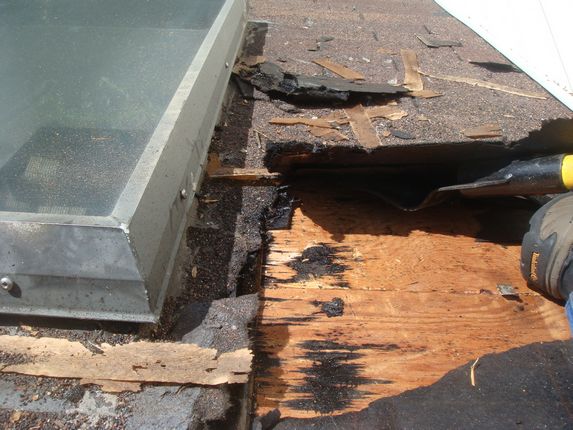
A skylight should bring natural light into a home—not rainwater, melting snow, drafts, or recurring worries every time a storm arrives.
For Arnprior homeowners, preventing skylight leaks begins long before water appears on the ceiling. Proper product selection, professional installation, correct flashing, roof maintenance, insulation, air sealing, and early attention to warning signs all contribute to a reliable skylight system.
This is particularly important in the Ottawa Valley, where roofs experience snow, ice, heavy rain, strong winds, summer heat, and repeated freeze-thaw cycles throughout the year.
Homeowners searching for skylight repair near me, VELUX skylight installation, VELUX skylight replacement, replacement skylights near me, VELUX skylight installer near Arnprior, or skylights near me cost should also understand an important distinction: water around a skylight does not always mean the skylight itself is leaking.
Condensation, damaged roofing, failed flashing, inadequate insulation, air leakage, and other roof problems can create similar symptoms.
Preventing problems therefore requires treating the skylight as part of the entire roof and building envelope.
Why Skylights Sometimes Develop Leaks
A skylight creates an opening through the roof.
That opening needs to manage water just as reliably as the surrounding roofing system.
Problems can develop when:
- Flashing is incorrect
- Flashing becomes damaged
- Roofing deteriorates
- Installation details are incorrect
- Seal components age
- Water is directed toward the opening
- Roof drainage is compromised
- Previous repairs were poorly completed
VELUX explains that its flashing systems are designed specifically around roof pitch and roofing material so water can drain correctly around the skylight.
That is why leak prevention starts with the installation rather than with a tube of sealant after a problem develops.
1. Choose the Correct Skylight for the Roof
Not every skylight works with every roof configuration.
Before installation, an Arnprior homeowner should know:
- Roof pitch
- Roofing material
- Mounting configuration
- Skylight dimensions
- Flashing requirements
Roof pitch is particularly important.
VELUX notes that its flashing kits have specific pitch requirements because sufficient slope is needed to drain water from the skylight and flashing effectively. Roofing material also determines which flashing system is appropriate.
A product should therefore be selected for the actual roof rather than simply because its dimensions fit the desired interior opening.
2. Use the Correct Flashing System
Flashing is one of the most important components of leak prevention.
It creates the transition between the skylight and roofing material while directing rainwater and snowmelt around the opening.
VELUX offers different systems for different applications, including flashing designed for shingles and shakes, high-profile materials, metal roofing, low-slope applications, and grouped skylights.
This matters because an asphalt-shingle roof should not automatically receive the same flashing approach as a metal or tile roof.
The roof and skylight need to work as one drainage system.
3. Don’t Depend on Exterior Caulking Alone
Applying more sealant around a leaking skylight can appear to solve a problem temporarily.
But it should not be treated as a substitute for a properly designed flashing system.
VELUX states that its engineered flashing systems are designed to shed water without depending on sealants that can deteriorate over time.
If an existing skylight repeatedly requires exterior caulking to remain dry, the underlying installation deserves closer inspection.
The actual problem may involve:
- Flashing
- Underlayment
- Roofing
- Improper installation
- Deteriorated components
Repeatedly covering symptoms can delay the repair that is actually required.
4. Make Sure Water Can Drain Around the Skylight
Roof drainage is fundamental.
Rainwater should travel down the roof and around the skylight without being trapped behind it.
The same principle applies to melting snow.
Proper flashing creates controlled drainage pathways around the opening.
VELUX explains that its flashing construction is intended to safely direct rainwater arriving from the roof above the skylight.
This is why flashing details at the top, sides, and bottom of the unit all matter.
5. Pay Attention to Roof Pitch
Roof slope affects how quickly water leaves the roof.
On a steeper roof, gravity moves water downward more readily.
Low-slope conditions require different installation considerations.
VELUX provides dedicated low-slope flashing solutions for appropriate curb-mounted applications, reinforcing why pitch needs to be established before product and flashing selection.
An installer should verify pitch rather than estimating it visually from the ground.
6. Use Proper Underlayment
Flashing is the primary water-management system, but additional protection around the roof opening can provide another layer of defence.
VELUX’s deck-mounted water-protection system combines a pre-attached deck seal, adhesive underlayment, and engineered flashing. For curb-mounted installations, its system includes underlayment, engineered flashing, and a curb gasket.
These layers demonstrate an important principle: effective skylight waterproofing should not depend on a single component.
7. Inspect the Surrounding Roofing
Sometimes a skylight gets blamed for a problem that actually begins elsewhere on the roof.
Water can travel.
A damaged shingle above the skylight may allow water beneath the roofing.
That moisture can then move along roof components before becoming visible near the skylight opening.
Homeowners should therefore inspect more than the skylight itself.
Potential problems include:
- Missing shingles
- Cracked shingles
- Loose roofing
- Damaged metal panels
- Deteriorated underlayment
- Nearby roof penetrations
- Roof valleys
A proper leak investigation should follow the water source rather than simply repairing the area where the stain appears indoors.
8. Be Careful With Roof Valleys
Roof valleys carry concentrated water.
During heavy rain or snowmelt, substantial amounts of water can travel through these channels.
Skylight placement should account for drainage patterns created by:
- Valleys
- Dormers
- Chimneys
- Roof intersections
- Other penetrations
This can be particularly relevant on custom or expanded Arnprior homes with complicated rooflines.
Good placement reduces unnecessary water-management challenges.
9. Keep Gutters and Drainage Systems Working
Gutters do not normally waterproof a skylight directly, but the roof drainage system still matters.
Blocked gutters can contribute to poor roof drainage and ice problems around roof edges.
Arnprior homeowners should keep gutters and downspouts maintained so water can move away from the roof and foundation effectively.
Roof maintenance should be considered as a complete system rather than treating every component independently.
10. Understand Snow Around Skylights
Snow accumulation around a skylight does not automatically mean there is a problem.
However, Ottawa Valley winters can create demanding roof conditions.
Snow may:
- Accumulate
- Melt
- Refreeze
- Form ice
- Melt again
The skylight installation must remain watertight through these repeated cycles.
Proper underlayment, flashing, roofing integration, insulation, and air sealing all contribute to winter performance.
11. Don’t Automatically Assume Condensation Is a Leak
This is one of the most important points for homeowners.
Water on the inside of a skylight does not always originate outdoors.
Natural Resources Canada explains that condensation occurs when moist indoor air contacts cooler surfaces. It can form on skylight glass, frames, weather seals, and surrounding walls.
Condensation becomes more likely when:
- Outdoor temperatures fall
- Indoor humidity rises
- Surface temperatures become colder
Bathrooms and kitchens can be especially susceptible because they generate more moisture.
How to Tell Condensation From a Roof Leak
The distinction is not always obvious.
Condensation may appear primarily:
- During very cold weather
- After showers or cooking
- On the interior glass
- Around cold interior surfaces
An exterior leak may be more closely associated with:
- Rain
- Melting snow
- Specific wind conditions
- Staining around the shaft or ceiling
However, these are only clues.
Persistent moisture should be professionally assessed because more than one problem can occur at the same time.
Moisture Between Glass Panes Is Different
Fogging or moisture trapped between the panes is not ordinary room-side condensation.
Natural Resources Canada notes that condensation between glazing layers can occur when the insulating glass seal has broken.
That condition may indicate the glazing unit needs replacement.
Homeowners should distinguish between moisture:
- On the room-side glass
- Around the skylight
- Between glazing panes
Each can point toward a different cause.
12. Control Indoor Humidity
Reducing excessive indoor moisture can help reduce condensation around skylights.
Natural Resources Canada recommends proper air circulation and operating a heat recovery ventilator, where present, as part of condensation management.
Homeowners should also use bathroom and kitchen exhaust ventilation appropriately.
This is especially important during Arnprior winters when windows and skylights naturally become colder.
13. Insulate Around Skylight Shafts
Insulation is an important but sometimes overlooked part of skylight performance.
A skylight installed correctly at roof level can still experience interior moisture problems if the surrounding shaft is poorly insulated.
Natural Resources Canada specifically recommends that skylight curbs and interior tunnels be well insulated and air sealed to reduce condensation.
This matters especially for flat-ceiling rooms where a deeper shaft connects the roof to the ceiling.
14. Air Seal the Skylight Opening
Insulation alone is not enough.
Warm, humid indoor air should not leak freely into colder roof or attic spaces.
Natural Resources Canada emphasizes that air barriers need continuity and that penetrations should be sealed to prevent warm, moist air from entering roof assemblies where it can condense.
A skylight installation therefore needs attention on both sides:
Outside, it needs effective water management.
Inside, it needs effective air and moisture control.
Why Air Leakage Can Look Like a Skylight Problem
Warm indoor air can carry significant moisture into the roof assembly.
Natural Resources Canada notes that airflow through small envelope openings can transport substantially more moisture than vapour diffusion through larger areas of building material.
If that moisture condenses near the skylight shaft, homeowners may see staining or dampness and conclude that rain is entering.
The actual problem could instead be an interior air leak.
Accurate diagnosis matters.
15. Check Operable Skylight Seals
Venting skylights have moving components that fixed skylights do not.
These can include:
- Weather seals
- Hinges
- Opening hardware
- Closing mechanisms
Natural Resources Canada recommends ensuring that hardware works correctly and seals remain in good condition on operable skylights.
If a venting skylight no longer closes properly, it should be inspected before harsh weather arrives.
16. Don’t Force a Skylight That Is Not Closing Properly
A skylight should close evenly and securely.
If operation becomes difficult, homeowners should not repeatedly force the mechanism.
The problem may involve:
- Hardware
- Alignment
- Debris
- Wear
- Controls
Addressing the problem early can prevent damage to components that help maintain the weather seal.
17. Inspect Skylights After Major Storms
Arnprior can experience strong winds, heavy rain, freezing rain, and winter storms.
After severe weather, homeowners can visually check for unusual signs such as:
- Interior staining
- New moisture
- Damaged roofing
- Debris accumulation
- Visible exterior damage
This does not mean climbing onto a wet, icy, or steep roof.
Many warning signs can be observed safely from inside or from ground level.
Professional inspection is appropriate when roof access is required.
18. Watch for Interior Warning Signs
A skylight can begin showing problems indoors before a homeowner notices anything unusual outside.
Warning signs include:
- Peeling paint
- Bubbling drywall
- Brown stains
- Damp trim
- Soft drywall
- Musty odours
- Repeated moisture marks
These signs should not simply be painted over.
The source of the moisture needs to be identified first.
19. Address Small Problems Early
A small water stain can be easy to ignore.
But moisture problems can affect:
- Drywall
- Insulation
- Wood framing
- Paint
- Interior finishes
Early investigation may prevent a relatively limited issue from becoming a larger repair.
The goal should be diagnosis rather than waiting for visible dripping.
20. Have Older Skylights Evaluated During Reroofing
Roof replacement is an important opportunity to evaluate existing skylights.
If a skylight is already significantly older, leaving it in place while installing a completely new roof may create future complications.
If replacement becomes necessary a few years later, some newer roofing may need to be disturbed.
Before reroofing, homeowners should assess:
- Skylight age
- Glazing condition
- Flashing
- Previous repairs
- Operation
- Interior moisture history
Replacing an aging skylight during the roofing project can sometimes be the more practical long-term approach.
New Roofing Does Not Automatically Fix an Old Skylight
A roof replacement should not assume that every existing skylight can simply remain untouched.
The interface between the skylight and new roofing needs careful attention.
Old flashing should be evaluated.
The skylight’s condition should also be assessed independently from the shingles.
A newer roof surrounding a deteriorated skylight does not make the skylight new.
21. Replace Failed Components Rather Than Repeatedly Patching Them
Temporary repairs have a purpose.
But a skylight that repeatedly develops the same problem may need a more complete solution.
Repeated application of roofing cement or caulking can hide the underlying issue without correcting:
- Failed flashing
- Damaged roofing
- Deteriorated glazing
- Structural damage
- Improper installation
A professional assessment can determine whether repair or replacement is more appropriate.
When Skylight Replacement Makes More Sense
Replacement may deserve consideration when several warning signs appear together.
Examples include:
- An older skylight with recurring leaks
- Failed insulating glass plus deteriorated flashing
- Repeated repairs before a roof replacement
- Physical frame or glazing damage
- An outdated unit that no longer closes correctly
Age alone does not determine the answer.
Condition and performance matter more.
22. Use Compatible Replacement Components
Skylight replacement should be treated as a system.
The new skylight, flashing, underlayment, roof material, and mounting method all need to be compatible.
VELUX provides product-specific installation instructions covering fixed, manual, electric, solar-powered, curb-mounted, deck-mounted, flashing, and other skylight systems.
This reinforces why a generic installation approach should not be used for every roof.
23. Pay Attention to Metal Roof Installations
Some Arnprior and rural Ottawa Valley properties use metal roofing.
Metal expands, contracts, and sheds water differently from asphalt shingles.
The skylight flashing system needs to be appropriate for that roof.
VELUX offers engineered metal-roof flashing for compatible applications rather than treating metal roofing the same as shingles.
Product-specific installation becomes especially important on these roofs.
24. Low-Slope Roofs Require Special Attention
An addition or modern home may have a lower roof slope than the main house.
Water drains differently from these roofs.
A skylight should never be selected without confirming that the product and flashing system are suitable for the actual pitch.
VELUX specifically offers low-slope flashing solutions for applicable installations.
25. Skylight Groups Need Proper Flashing Too
Some homes use two or more skylights together.
These arrangements require careful water management between the units.
VELUX offers combination flashing systems designed specifically for grouped installations and specifies pitch and spacing requirements for those systems.
Homeowners planning several skylights should therefore treat them as one coordinated roof system rather than several unrelated openings.
26. Keep Nearby Roof Debris Under Control
Leaves, twigs, and other debris can collect around roof penetrations, particularly on homes surrounded by mature trees.
Arnprior and nearby rural properties can have substantial tree cover.
Homeowners should keep an eye on:
- Roof valleys
- Gutters
- Drainage areas
- Areas above skylights
Debris should not be allowed to interfere with normal water movement.
Roof cleaning should always be performed safely.
27. Don’t Walk on Skylights
Roof maintenance should never involve standing or stepping on skylight glazing.
Roof work carries significant fall hazards, and skylights themselves should be treated as openings rather than walking surfaces.
When inspection or maintenance requires roof access, professional service is the safer option.
28. Coordinate Skylights With Roof Renovations
Major renovations can change how water moves across the roof.
Adding:
- Dormers
- Extensions
- New roof sections
- Solar equipment
- Other penetrations
can alter drainage patterns around an existing skylight.
The skylight should be considered when these changes are designed.
A unit that performed well under the original roof configuration may now sit near a new valley or drainage path.
29. Bathroom Skylights Need Extra Moisture Attention
Bathrooms create large amounts of humidity.
A skylight in an ensuite or family bathroom may therefore experience condensation more readily than one in a dry living room.
Good bathroom ventilation remains essential.
An operable skylight can provide additional natural ventilation when appropriate, but it should complement rather than replace required mechanical exhaust.
30. Kitchen Skylights Also Need Moisture Management
Cooking produces moisture as well.
Boiling water, dishwashing, and everyday kitchen activity can raise indoor humidity.
A kitchen skylight may therefore benefit from:
- Effective range ventilation
- Proper indoor humidity management
- Good air circulation
- Correct insulation and air sealing
Again, moisture on the interior glass does not necessarily indicate exterior leakage.
Why Arnprior’s Climate Makes Prevention Important
Arnprior sits where homeowners experience substantial seasonal variation.
A roof that performs well in July must also handle January.
During a typical year, a skylight can be exposed to:
- Heavy summer rain
- Intense sun
- Autumn leaves
- Snow
- Ice
- Spring snowmelt
Preventive maintenance and proper installation are therefore more valuable than repeatedly responding to emergencies.
Older Arnprior Homes Need Individual Evaluation
Established homes closer to central Arnprior may have undergone multiple roofing and renovation projects over the decades.
An existing skylight might have been installed during:
- A previous reroofing
- Attic renovation
- Home addition
- Bathroom remodel
- Kitchen renovation
Its flashing may not be original to the current roof.
There may also have been previous repairs that are difficult to see from inside.
Inspection can reveal how the entire assembly is currently performing.
Newer Homes Can Have Skylight Problems Too
Age is not the only factor.
A newer skylight can develop problems if:
- The wrong flashing was used
- Installation details were incorrect
- Roofing around it becomes damaged
- Air sealing is incomplete
This is why homeowners should focus on installation quality rather than assuming that a newer unit is automatically protected.
Skylights in Rural Arnprior Properties
Properties outside the town centre may have larger custom homes, additions, barns, workshops, or more complex residential rooflines.
They may also have greater exposure to:
- Wind
- Mature trees
- Snow drifting
These site conditions can influence skylight placement and maintenance.
A roof-specific assessment remains essential.
How Often Should a Skylight Be Inspected?
There is no single inspection schedule appropriate for every property.
However, homeowners should pay attention:
- After severe storms
- When roof damage is suspected
- When interior stains appear
- Before major roof work
- When an older skylight begins behaving differently
Routine roof inspections can include skylights as part of the overall assessment.
What Should a Professional Skylight Inspection Include?
A thorough assessment may examine:
- Skylight glazing
- Frame condition
- Flashing
- Roofing around the unit
- Underlayment where accessible
- Interior staining
- Operating hardware
- Weather seals
- Insulation
- Air sealing
- Previous repairs
The goal should be to identify the source of a problem rather than simply identify the wettest visible area.
How Much Does Skylight Leak Repair Cost?
Homeowners searching for skylight repair near me cost should expect considerable variation.
The cost depends on what is actually wrong.
A project could involve:
- Minor component repair
- Roofing repair
- Flashing replacement
- Interior drywall repair
- Insulation work
- Complete skylight replacement
Roof height, slope, material, accessibility, and interior finishing can also affect the project.
An inspection is therefore necessary before a meaningful repair scope can be established.
Repair or Replace?
Repair may make sense when:
- The skylight itself is relatively new
- The problem is clearly isolated
- Glazing remains sound
- Roofing and framing remain in good condition
Replacement may be more appropriate when:
- The unit is older
- Leaks repeatedly return
- Glazing has failed
- Components are damaged
- A roof replacement is already planned
The decision should be based on long-term value rather than simply choosing the lowest immediate cost.
Questions Arnprior Homeowners Should Ask
Before repairing or replacing a skylight, homeowners should ask:
- Is this actually a roof leak or condensation?
- Where is the water entering?
- Is the flashing correct for the roofing material?
- Is the roof pitch compatible with the system?
- Is surrounding roofing damaged?
- Is the skylight shaft properly insulated?
- Is the opening air sealed?
- Are operating seals still working?
- Has the skylight been repaired before?
- How old is the skylight?
- Is roof replacement planned soon?
- Would replacement be more practical than another repair?
These questions help identify the real problem.
Finding a Skylight Installer Near Arnprior
Homeowners searching for skylight installer near Arnprior, VELUX skylight installer near me, skylight repair near me, replacement skylights near me, or residential skylights near me should look for an installer who evaluates the complete skylight assembly.
The assessment should go beyond simply adding exterior sealant.
It should consider:
- Product compatibility
- Roof pitch
- Roofing material
- Flashing
- Drainage
- Insulation
- Air sealing
- Condensation
- Interior damage
VELUX’s own guidance emphasizes that flashing must match roof pitch and roofing material, while Natural Resources Canada emphasizes exterior flashing alongside insulation and air sealing around the skylight.
Together, those principles show why reliable skylight performance depends on both exterior water management and interior building-envelope details.
Preventing Leaks Starts With the Complete System
The best skylight leak is the one that never develops.
For Arnprior homeowners, prevention begins with choosing the right skylight and matching it to the roof.
It continues with correct flashing, underlayment, drainage, insulation, air sealing, humidity control, maintenance, and timely inspection.
It also requires understanding that water near a skylight is not automatically proof of an exterior leak. Natural Resources Canada confirms that condensation can develop on skylight glass, frames, seals, and surrounding walls when humid indoor air meets cold surfaces.
Homeowners researching VELUX skylights Canada, VELUX skylight installation, VELUX skylight replacement, skylight repair near me, replacement skylights near me, skylights near me cost, or a professional VELUX skylight installer near Arnprior should therefore focus on the entire installation rather than one visible component.
The skylight matters.
The flashing matters.
The surrounding roof matters.
The insulation and air sealing matter.
And ongoing roof maintenance matters.
When these elements work together, a skylight can continue doing exactly what it was installed to do: bring natural light into an Arnprior home while keeping Ottawa Valley weather where it belongs—outside.
Cut repetition and tighten the articleAdd a stronger Arnprior-focused call to action