
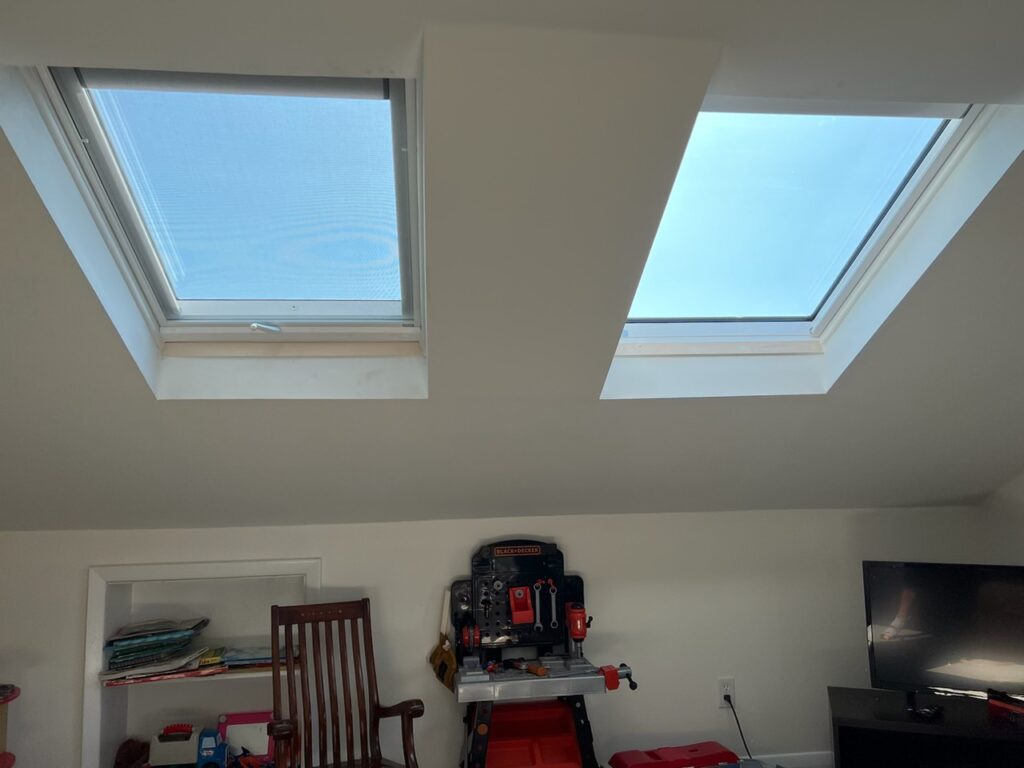
Natural light can completely change how a family experiences a home. A kitchen that once depended on ceiling fixtures can become bright throughout the morning. A dark upstairs hallway can suddenly feel open and welcoming. A bathroom can gain abundant daylight without sacrificing privacy. Even a central staircase can become an architectural feature when sunlight is introduced from above.
For Ottawa homeowners considering new residential skylights, however, choosing the skylight itself is only part of the decision. Placement matters just as much as the product.
The ideal skylight location depends on the room, roof orientation, ceiling design, surrounding trees, roof structure, desired amount of daylight, and whether ventilation is needed. A professionally planned installation considers all of these factors before an opening is created in the roof.
This is particularly important throughout Ottawa, where homes must perform through cold winters, snow accumulation, freeze thaw conditions, warm summers, and significant seasonal changes in sunlight.
From established properties in Nepean to newer family homes in Barrhaven, Kanata and Stittsville, thoughtful skylight placement can create brighter interiors while making natural light a genuine part of the home’s architecture.
For homeowners searching for residential skylights near me, skylight installer near Ottawa, VELUX skylights Canada, VELUX skylights installation, replacement skylights near me, or VELUX skylight installer near me, understanding where a skylight should be installed is an excellent place to begin.
Why Skylight Placement Is So Important
Two identical skylights can produce very different results depending on where they are installed.
Placement influences the amount of daylight entering a room, when that light arrives, how it spreads across the interior, how much solar heat enters the home, and what occupants see when looking through the glass.
The Government of Canada’s guidance on passive solar design emphasizes that window orientation and solar exposure influence heat gain and building performance. These principles are important when planning roof glazing as well. (Natural Resources Canada)
A successful skylight installation therefore considers much more than finding an available section of roof.
The objective should be to place the skylight where it delivers useful daylight while complementing the home’s architecture and energy performance.
1. Above the Kitchen Island
For many Ottawa family homes, the kitchen is the most important room in the house.
It may serve simultaneously as a cooking area, breakfast space, homework station, entertaining area and everyday gathering place. That makes the kitchen one of the strongest candidates for skylight installation.
Placing a skylight above or close to the kitchen island can provide daylight directly over one of the most frequently used surfaces.
Natural overhead illumination can enhance:
- Food preparation
- Countertop visibility
- Cabinet finishes
- Stone surfaces
- Overall kitchen brightness
This placement can be especially effective in open concept kitchens where the island sits farther from exterior windows.
In a Barrhaven or Kanata home with windows concentrated at the front and rear elevations, for example, a centrally positioned kitchen may remain relatively dark even when adjoining rooms receive plenty of daylight.
A skylight can address that imbalance from above.
2. Along Open Concept Kitchen and Living Areas
Open concept renovations are common throughout Ottawa.
When walls between kitchens, dining rooms and family rooms are removed, the resulting space may be considerably larger than the original rooms.
While the openness is appealing, daylight does not automatically reach every part of the expanded interior.
One solution is to use multiple skylights rather than relying on one oversized opening.
Two or three carefully spaced skylights can distribute daylight more evenly across a large room and create a deliberate architectural rhythm.
For example, skylights could follow the length of a kitchen island or be positioned between the kitchen and family room.
The goal is not simply to add the greatest possible amount of glass. It is to distribute daylight where the family actually spends time.
3. Above the Main Family Room
The family room is another excellent location.
This is often where households spend evenings, entertain guests and relax on weekends. A strategically placed skylight can make the room feel noticeably more spacious during daylight hours.
In family rooms with high ceilings, a skylight can also draw attention upward.
This is particularly effective when the room includes:
- Vaulted ceilings
- Cathedral ceilings
- Exposed beams
- Tall fireplaces
- Architectural ceiling details
Instead of treating the ceiling as an empty surface, the skylight becomes part of the room’s design.
In custom homes around Manotick or newer properties in Stittsville, this approach can create a particularly dramatic result.
4. Above a Central Staircase
Some of the best skylight placements are not inside traditional rooms at all.
A central staircase can be an exceptional daylighting location because one skylight may influence more than one level of the home.
Sunlight entering above the stairs can potentially reach:
- The upper landing
- The staircase
- The main floor
- Adjacent hallways
This makes the placement highly efficient from a daylighting perspective.
It can also turn an otherwise functional staircase into an architectural feature.
Instead of switching on lights whenever someone moves between floors, the centre of the house can receive natural illumination throughout much of the day.
5. In Dark Second Floor Hallways
Upstairs hallways frequently receive surprisingly little daylight.
Bedrooms may have large windows, yet closing the bedroom doors can leave the hallway dependent almost entirely on artificial lighting.
This is where homeowners should consider whether a traditional skylight or a sun tunnel would work better.
A conventional skylight may be appropriate where the roof and ceiling relationship is straightforward and the homeowner wants a larger view of the sky.
A sun tunnel may be more practical where attic space separates the ceiling from the roof.
Sun tunnels capture daylight at roof level and transfer it through a reflective tube to a ceiling diffuser below.
For compact interior areas, they can provide significant daylight without requiring the larger opening associated with a conventional skylight.
6. Inside Windowless Bathrooms
Bathrooms are among the strongest candidates for overhead daylight.
Traditional windows can create privacy concerns, especially in neighbourhoods where houses are relatively close together.
A skylight changes that equation.
Because the opening is above eye level, homeowners can introduce substantial natural light while preserving wall space and privacy.
Good placement options include above a freestanding bathtub, between vanity and shower areas, or centrally within the room.
Venting models can provide another benefit.
Warm, humid air naturally rises, so an operable skylight can support ventilation when conditions allow.
This can be particularly appealing in busy family bathrooms that experience significant moisture every morning and evening.
7. Above a Primary Ensuite
The same principle becomes even more powerful in a primary ensuite.
Modern ensuite renovations increasingly emphasize relaxation and spa inspired design.
A skylight can introduce changing daylight throughout the day while allowing occupants to maintain privacy.
Imagine a freestanding tub beneath a view of the sky rather than a conventional ceiling.
The physical footprint of the bathroom has not changed, yet the room can feel significantly more open.
For luxury properties in Manotick and larger custom homes around Ottawa, this is one of the most visually impactful skylight placements available.
8. Over the Dining Area
Dining spaces are sometimes overlooked when planning skylights.
Yet a skylight above the dining table can create an inviting environment for breakfasts, weekend lunches and family gatherings.
Morning and afternoon daylight can reduce the need for artificial illumination, while the view upward adds architectural character.
In an open concept plan, the dining area can also become the transition point between skylights installed over the kitchen and windows in the living area.
This helps natural light feel intentionally distributed throughout the space.
9. Inside the Home Office
Home offices have become permanent features in many Ottawa houses.
Placing a skylight above or slightly behind the primary work area can introduce daylight without occupying valuable wall space.
That matters because office walls are often needed for:
- Storage
- Shelving
- Monitors
- Artwork
- Filing systems
Careful positioning is important, however.
Direct sunlight hitting a computer monitor can create unwanted glare. The best placement therefore depends on desk orientation, roof direction and how sunlight moves throughout the day.
Blinds or shades can provide additional control when necessary.
10. Over a Reading Nook
Not every skylight needs to illuminate a large room.
Sometimes a smaller, intentionally positioned skylight creates the most memorable feature.
A reading nook near a staircase, upstairs landing or quiet corner can become far more inviting when naturally illuminated from above.
This works especially well in family homes where otherwise unused areas are being transformed into functional spaces.
11. Above a Mudroom
Ottawa families know how important a functional mudroom becomes during winter.
Boots, coats, backpacks and sports equipment can quickly fill the space.
Unfortunately, mudrooms are frequently positioned beside garages and receive limited natural light.
A sun tunnel or compact skylight can dramatically improve visibility while making the space feel less enclosed.
Because these rooms are used multiple times every day, the improvement can have an outsized impact on everyday living.
12. In Laundry Rooms
Laundry rooms face a similar problem.
They are often placed deep inside the floor plan where exterior windows are unavailable.
Introducing daylight can make the room brighter while improving colour visibility when sorting clothing.
Where a traditional skylight is impractical, a sun tunnel may provide an effective alternative.
Skylight Orientation Matters
Once the ideal room has been selected, roof orientation becomes an important consideration.
Different orientations create different daylight characteristics.
North Facing
North facing roof glazing generally produces softer, more consistent illumination with less direct solar exposure.
This can work well in spaces where balanced daylight is more important than strong direct sun.
East Facing
East facing skylights capture more morning sunlight.
They can be particularly attractive in kitchens, breakfast areas and bathrooms used heavily in the morning.
West Facing
West facing skylights receive stronger afternoon and evening exposure.
This may suit certain living areas but requires careful consideration of summer solar gain.
South Facing
South facing skylights can receive substantial sunlight and potentially greater solar heat gain.
Appropriate glazing and shading become particularly important.
Natural Resources Canada provides extensive information about how orientation, glazing and solar exposure interact within energy efficient home design. (Natural Resources Canada)
Ottawa’s Winter Sun Should Be Considered
Skylight planning in Ottawa cannot focus exclusively on summer.
The sun sits lower in the sky during winter, daylight hours become shorter, and snow may accumulate around roof openings.
A properly selected and professionally installed skylight must therefore be designed as part of the roof system rather than simply as a decorative window.
Roof pitch, flashing, underlayment, insulation and drainage all matter.
This is one reason homeowners comparing skylights near me cost should look beyond the price of the skylight itself.
The complete installation system is what determines long term performance.
Consider Surrounding Trees
Ottawa is fortunate to have many mature neighbourhoods.
Areas of Nepean, Manotick and established sections of Kanata may have substantial tree coverage.
Trees can influence skylight placement by:
- Creating seasonal shade
- Blocking direct sunlight
- Dropping leaves and debris
- Changing daylight patterns throughout the year
A roof location that appears bright during winter may become significantly shaded once trees regain their leaves.
Site specific planning therefore matters.
Ceiling Shape Changes the Result
The roof opening is only one part of a skylight.
The light shaft connecting the roof to the interior ceiling can significantly influence how daylight spreads through the room.
A narrow vertical shaft tends to create a more concentrated pool of light.
A flared shaft can distribute daylight across a wider area.
This distinction becomes particularly important in homes with attic space between the ceiling and roof.
Thoughtful shaft design can make the same skylight considerably more effective.
Fixed or Venting Skylight?
Placement should also reflect whether ventilation is needed.
Fixed skylights are ideal when daylight is the primary objective.
Venting skylights can be particularly useful in kitchens, bathrooms and high ceiling areas where warm air accumulates.
VELUX Canada offers fixed, manual, electric and solar powered residential skylight options, along with roof windows and sun tunnels. (VELUX Canada)
The right choice depends on the room and how the family intends to use it.
When a Sun Tunnel Makes More Sense
A conventional skylight is not automatically the best solution for every dark room.
For small interior spaces, a sun tunnel may be more practical.
Good candidates include:
- Hallways
- Closets
- Powder rooms
- Laundry rooms
- Pantries
- Mudrooms
This allows homeowners to reserve larger skylights for rooms where a view of the sky and stronger architectural impact are desirable.
Using both products strategically can create a daylighting plan for the entire home rather than treating each room separately.
Skylight Placement During Roof Replacement
If an Ottawa home is approaching a roof replacement, it can be an excellent time to evaluate skylights.
Existing units can be assessed for age and condition, while potential new locations can be considered before new roofing materials are installed.
Homeowners with aging skylights may also want to investigate VELUX skylights replacement rather than automatically reinstalling older units during reroofing.
Coordinating the work can allow the flashing and roofing materials to be integrated as part of one project.
Placement During a Major Renovation
Kitchen renovations, additions, attic conversions and open concept remodels provide another opportunity.
When skylights are considered early, designers can coordinate:
- Roof framing
- Electrical components
- Interior shafts
- Ceiling finishes
- Lighting layouts
- Ventilation
This produces a more intentional finished design.
Trying to add a skylight after every other renovation decision has already been finalized may unnecessarily limit placement options.
Avoid Choosing Placement Based Only on Appearance
It is easy to stand inside a room and identify the location where a skylight would look best.
But the roof above that location may contain structural framing, plumbing vents, HVAC equipment or other obstacles.
The ideal interior location must therefore be coordinated with conditions above the ceiling.
Professional assessment helps determine whether the desired location is practical or whether a small adjustment would deliver better performance.
Multiple Skylights Can Be Better Than One Large Skylight
Large rooms do not necessarily require one enormous skylight.
Multiple smaller skylights can often provide more balanced illumination.
For example, two units positioned symmetrically above a kitchen can distribute daylight more evenly than one unit positioned in the centre.
Multiple skylights can also create architectural rhythm across vaulted ceilings.
The best configuration depends on roof framing, room dimensions and the desired aesthetic.
Professional Installation Is Critical in Ottawa
Placement and installation should ultimately work together.
Ottawa roofs experience demanding conditions, including snow, ice, wind driven rain and repeated temperature changes.
Professional skylight installation should address:
- Correct flashing
- Waterproof underlayment
- Roof pitch
- Roofing material
- Insulation
- Air sealing
- Interior finishing
VELUX provides installation systems and flashing kits designed for specific roof applications, which is why following the appropriate installation requirements is important. (VELUX Canada)
A beautifully positioned skylight that is poorly integrated into the roof is not a successful installation.
Best Placement Depends on the Family
There is no universal location that works for every Ottawa home.
For one family, the biggest improvement may come from placing a skylight above a dark kitchen island.
For another, it may be illuminating the staircase connecting two floors.
A Barrhaven homeowner may benefit most from a sun tunnel in an upstairs hallway, while a Manotick homeowner renovating a vaulted great room may want several large skylights arranged as an architectural feature.
The strongest daylighting plan starts by asking where natural light would improve everyday life the most.
Bringing Better Natural Light Into Ottawa Family Homes
The best skylight placement is ultimately about more than finding space on a roof. It is about understanding how a family moves through its home, which rooms are used most frequently, where natural light is currently missing, and how daylight changes throughout the day and across Ottawa’s four distinct seasons.
Kitchens, family rooms, bathrooms, staircases, home offices and dining areas can all benefit from thoughtfully positioned residential skylights. Smaller spaces such as hallways, laundry rooms, closets and mudrooms may be better candidates for sun tunnels. In larger open concept spaces, multiple skylights can distribute daylight more effectively and become an intentional part of the home’s architecture.
For homeowners in Ottawa, Kanata, Stittsville, Barrhaven, Nepean, Manotick, Arnprior and Kemptville, careful planning is the key to getting the greatest benefit from a new skylight.
Anyone searching for residential skylights near me, skylight installer near Ottawa, VELUX skylights Canada, VELUX skylights installation, VELUX skylight sizes, replacement skylights near me, or VELUX skylight installer near me should consider placement as one of the most important decisions in the entire project.
When the right skylight is installed in the right location, it does much more than brighten a room. It can change how the entire home looks, feels and functions every single day.