
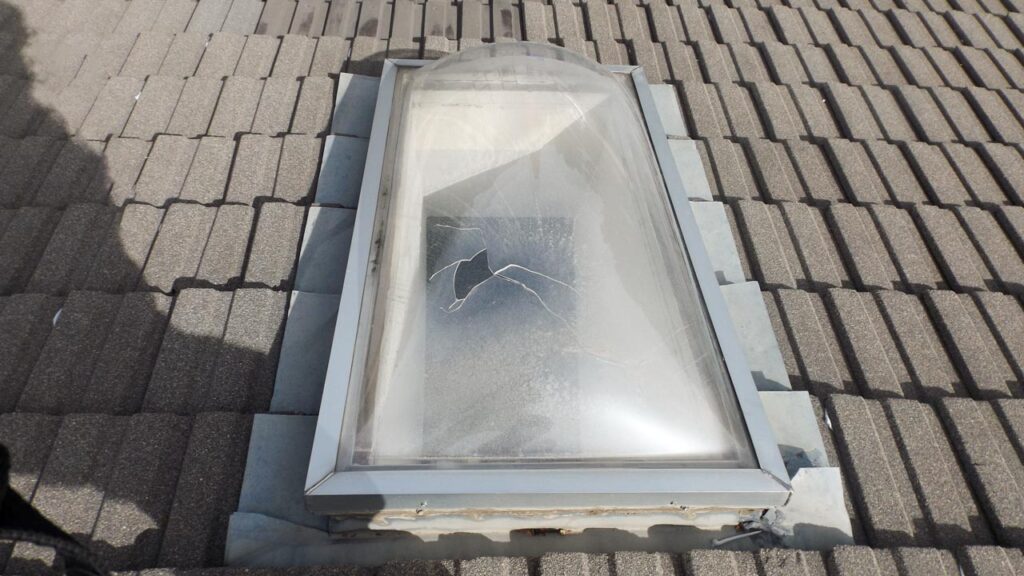
As fall approaches in Arnprior, homeowners naturally begin thinking about preparing their properties for colder weather. Furnaces are checked, gutters are cleaned, exterior maintenance is completed, and roofs are inspected before snow and freezing temperatures arrive. An older skylight deserves a place on that seasonal checklist as well.
A skylight spends every day exposed to rain, wind, ultraviolet light, snow, ice, and major temperature changes. Over many years, glazing seals, flashing, frames, operating components, and surrounding roofing can deteriorate. A skylight that appeared problem-free through summer may begin showing drafts, condensation, or moisture issues once temperatures fall.
VELUX says its skylights can typically last about 20 to 30 years under normal exposure and recommends considering an upgrade around the 30-year point rather than necessarily waiting for a failure. The company also identifies reroofing as an advantageous time to replace aging skylights.
For homeowners searching for replacement skylights near me, VELUX skylight replacement, VELUX skylights Canada, VELUX skylight installer near me, or skylights near Arnprior, inspecting older skylights before winter can help uncover problems while there is still time to plan an appropriate solution.
Why Inspect Skylights Before an Arnprior Winter?
Winter places very different demands on a roof than summer.
Arnprior homeowners have to prepare for freezing temperatures, snowfall, ice, repeated freeze-thaw conditions, and indoor-to-outdoor temperature differences.
Those conditions can expose weaknesses that were less obvious during warmer weather.
An older skylight may have:
- Deteriorated flashing
- Aging seals
- Damaged glazing
- Air leakage
- Inadequate insulation
- Moisture around the light shaft
- Previous temporary repairs
- Problems with surrounding shingles
Natural Resources Canada notes that skylights can experience water leakage and condensation around frames, curbs, and tunnels. It recommends keeping exterior seals and flashing in good condition while ensuring skylight curbs and interior tunnels are properly insulated and air sealed.
That makes fall a useful time to evaluate whether an older skylight is ready for another winter.
How Old Is Too Old for a Skylight?
There is no exact age at which every skylight suddenly fails.
Installation quality, product design, roof exposure, maintenance, roofing material, and previous repairs all affect service life.
However, age should become part of the conversation once a skylight has been installed for decades.
VELUX states that its skylights can last approximately 20 to 30 years with normal wear from exposure to the elements. It recommends considering replacement at around 30 years so homeowners can benefit from newer product technology rather than waiting for a problem to develop.
Age becomes even more significant when it appears alongside symptoms such as moisture, drafts, cloudy glazing, or repeated repairs.
1. Water Stains Around the Skylight Need Attention
One of the most recognizable warning signs is staining around the skylight or light shaft.
Homeowners may notice:
- Brown ceiling marks
- Yellow staining
- Bubbling paint
- Damp drywall
- Peeling finishes
- Water droplets
- Soft drywall
- Discolouration after rain
These signs deserve investigation before winter.
However, water appearing around a skylight does not automatically mean the skylight itself has failed.
The problem could involve surrounding roofing, flashing, underlayment, another roof penetration, or condensation.
The source needs to be identified before deciding whether repair or replacement is appropriate.
2. Check for Fogging Between the Glass
A clear skylight should provide an unobstructed view through its glazing.
If an older unit appears persistently cloudy or foggy, homeowners should determine where that moisture is located.
Condensation on the room-facing surface can occur when humid indoor air encounters sufficiently cold glass.
Moisture trapped between panes, however, can indicate failure of the insulating glass seal.
Natural Resources Canada specifically identifies condensation between glass panes as a possible sign of a broken seal.
An older skylight showing persistent internal fogging should therefore be professionally evaluated.
3. Drafts Can Become Much More Noticeable in Winter
A minor air leak may barely attract attention during September.
In January, it can feel very different.
If homeowners notice cold air around an older skylight, the problem could involve the unit itself or the surrounding construction.
Potential causes include:
- Deteriorated seals
- Air leakage around the opening
- Insufficient insulation
- Poorly sealed light shafts
- Aging components
Natural Resources Canada recommends that skylight and tunnel installations be well sealed on both the interior and exterior and properly insulated.
Drafts therefore deserve investigation rather than simply being accepted as normal behaviour for a skylight.
4. Condensation Should Be Diagnosed Correctly
Condensation can be confusing because it does not always indicate a leak.
During colder weather, warm indoor air containing moisture can contact a cold surface and form water droplets or frost.
Natural Resources Canada explains that the risk increases as outdoor temperatures fall or indoor humidity rises. It notes that condensation can occur on skylight glass, frames, seals, surrounding walls, or between panes when an insulating-glass seal has failed.
This distinction matters.
A homeowner may see water around a skylight and immediately assume rain or melting snow is entering through the roof.
The actual cause could instead involve indoor humidity, insulation, air circulation, or air sealing.
Professional assessment can help distinguish condensation from exterior water penetration.
5. Look for Physical Damage
Visible deterioration is another reason to investigate replacement.
Possible warning signs include:
- Cracked glazing
- Damaged frames
- Deteriorated exterior components
- Warped parts
- Damaged flashing
- Broken operating hardware
- Noticeable gaps
- Aging previous repairs
Physical damage should not be ignored simply because the skylight has not leaked yet.
A component exposed to another full Arnprior winter may deteriorate further.
6. Repeated Repairs Can Signal a Larger Problem
Occasional maintenance does not automatically mean a skylight needs replacement.
Repeated repairs are different.
If the same older skylight has needed recurring caulking, flashing work, moisture repairs, or other temporary fixes, homeowners should consider whether continuing to repair the aging installation remains worthwhile.
Temporary sealant should not become the long-term waterproofing strategy for a roof opening.
A proper assessment can compare the condition of the skylight, flashing, surrounding roof, and interior opening before determining the next step.
7. Roof Replacement Is an Ideal Time to Evaluate Skylights
Homeowners planning a roof replacement should assess existing skylights before new roofing is installed.
VELUX specifically recommends considering skylight replacement during reroofing because an old skylight may otherwise require work after the new roof has already been completed.
Consider an Arnprior home with a roof and skylight both installed roughly two decades ago.
Replacing the shingles while retaining the aging skylight may initially reduce the project scope. But if the skylight then requires replacement several years later, roofing around it may need to be disturbed again.
Evaluating both at the same time can help homeowners make a more informed long-term decision.
Should Every Skylight Be Replaced With a New Roof?
No.
An existing skylight should be evaluated based on its age, condition, performance, flashing, glazing, and compatibility with the new roofing system.
A relatively recent skylight in excellent condition is different from a decades-old unit that has already experienced recurring problems.
The key is to make the decision before the reroofing project is completed.
That allows the roof and skylight to be planned as one system.
Why Flashing Is So Important Before Winter
Flashing helps move water around a skylight and continue it down the roof.
When flashing is damaged, improperly installed, or incompatible with the surrounding roofing, water management can be compromised.
This becomes particularly important when snow melts and water moves down the roof around skylight openings.
VELUX publishes different flashing installation systems for shingles and shakes, tile, metal roofing, and combination applications, reinforcing that flashing must be matched to the roof and skylight configuration.
Proper skylight replacement therefore involves much more than removing one glass unit and installing another.
A Skylight Is Part of the Roofing System
Homeowners often think of skylights as windows in the ceiling.
From a building-envelope perspective, they are also roof penetrations.
A successful installation has to coordinate:
- Skylight
- Roof opening
- Underlayment
- Flashing
- Roofing materials
- Insulation
- Air sealing
- Interior shaft
- Interior finishes
Failure in one of these areas can affect the performance of the entire installation.
That is why professional VELUX skylight installation should be approached as both a daylighting project and a roofing project.
Why Insulation Matters in Arnprior
The difference between indoor and outdoor temperatures becomes substantial during Eastern Ontario winters.
If the area surrounding the skylight is poorly insulated, interior surfaces can become colder.
That can increase the potential for condensation.
Natural Resources Canada recommends that skylight curbs and interior tunnels be well insulated and air sealed specifically to help reduce condensation.
When an old skylight is removed, replacement can provide an opportunity to evaluate the condition of the opening and surrounding insulation rather than simply installing a new unit over unresolved deficiencies.
Air Sealing Matters Just as Much
Insulation slows heat transfer.
Air sealing helps control unwanted air movement.
Both matter.
Warm, moisture-containing indoor air should not be able to move freely into cold portions of the skylight assembly.
A quality replacement should therefore address the connection between the new skylight and the home’s existing air-control layers.
This is particularly important when an older skylight installation predates current building practices or has been modified during previous renovations.
Energy Performance Can Be a Reason to Upgrade
Replacement does not have to happen only because a skylight is actively leaking.
Older glazing technology may perform differently from modern energy-efficient products.
Natural Resources Canada says ENERGY STAR-certified skylights are about 35% more energy efficient than average skylights and emphasizes that poor installation can lead to condensation, drafts, or water leakage.
Modern energy-efficient fenestration can incorporate features such as low-emissivity coatings, improved frames, gas-filled glazing units, and better airtightness.
Homeowners replacing a decades-old skylight should therefore compare more than dimensions and appearance.
Understanding U-Factor
Homeowners researching VELUX skylight sizes and prices may encounter technical performance ratings.
One important measurement is U-factor.
Natural Resources Canada defines U-factor as the rate at which heat transfers from warmer to colder areas. A lower U-factor indicates greater efficiency.
ENERGY STAR certification criteria for residential unit skylights in Canada specify a maximum U-factor of 2.29 W/m²·K.
These technical ratings can help homeowners compare performance instead of choosing a replacement solely according to price.
Fixed or Venting Replacement Skylight?
Replacement creates an opportunity to reconsider what the room needs.
If daylight is the only objective, a fixed skylight may remain appropriate.
If additional ventilation would be useful, an operable model may be worth investigating.
Potential locations for venting skylights can include:
- Bathrooms
- Kitchens
- Upper-storey rooms
- High-ceiling spaces
VELUX also offers newer solar-powered options among its replacement solutions.
The appropriate choice depends on the room, installation height, roof configuration, and homeowner preferences.
Replacing a Skylight Can Change the Room
Homeowners do not necessarily have to recreate the old installation exactly.
A replacement project can provide an opportunity to ask whether the existing skylight still works for the room.
Perhaps the kitchen has been renovated since the original unit was installed.
Maybe an attic has been converted into living space.
Perhaps an older bathroom now needs additional ventilation.
Or the homeowner may simply want better daylight control.
Depending on roof framing and project scope, the replacement process can become part of a broader improvement rather than merely exchanging an old product for a new one.
Should the Existing Skylight Size Be Retained?
Often, using the existing opening can simplify replacement.
However, homeowners should not assume that the same dimensions are automatically the best choice.
VELUX recommends that an installer measure the existing skylight to determine the appropriate replacement size. Its replacement guidance identifies exterior width, length, curb height, and interior drywall opening dimensions as useful measurements.
Changing dimensions can involve additional structural and interior work.
If the existing size already provides the desired amount of daylight, maintaining a compatible opening may be the more practical solution.
What Determines Skylight Replacement Cost?
Homeowners searching for skylights near me cost, VELUX skylight price, or replacement skylights near me may hope to find one standard installed price.
Skylight replacement is too property-specific for one figure to represent every project accurately.
Cost can be affected by:
- Skylight model
- Skylight dimensions
- Fixed or venting design
- Roof pitch
- Roofing material
- Roof height
- Accessibility
- Flashing requirements
- Condition of the existing opening
- Interior repairs
- Structural changes
- Number of skylights
- Electrical requirements for applicable products
A straightforward replacement on an accessible asphalt-shingle roof will be very different from replacing a skylight high on a complex roof with significant interior repairs.
Don’t Wait for an Active Leak
One of the strongest reasons to inspect older skylights before winter is that replacement does not have to begin with water dripping into the house.
Earlier warning signs can include:
- Persistent drafts
- Deteriorated seals
- Fogging between panes
- Aging flashing
- Repeated repairs
- Visible exterior deterioration
- Interior staining
- An approaching roof replacement
VELUX’s guidance similarly notes that homeowners do not need to wait for a problem to arise when a skylight is approaching the later part of its expected service life.
Preventive evaluation gives homeowners more control over scheduling and product selection.
Arnprior’s Local Housing Mix Makes Inspection Important
Arnprior contains a mixture of historic properties, established neighbourhoods, renovated houses, and newer residential construction.
The Town of Arnprior highlights its historic downtown and the Arnprior and District Museum as important parts of the community’s character.
Homes around established streets near the downtown core can have very different roof assemblies from newer properties elsewhere in the community.
An older home may contain:
- Previous roof modifications
- Older framing
- Additions
- Multiple roofing layers
- Skylights installed during past renovations
A newer property may present a more straightforward roof structure but can still require careful attention to flashing, insulation, and product compatibility.
That local variety makes site-specific evaluation important.
Homes Near the Madawaska and Ottawa Rivers
Arnprior’s setting near major waterways contributes significantly to its local identity.
Properties throughout the community vary in exposure, tree coverage, roof orientation, and surrounding landscape.
A skylight installation should account for the individual roof rather than relying on assumptions based simply on neighbourhood or house age.
Mature trees can shade portions of the roof.
Complex rooflines can affect drainage.
Previous additions can create valleys or roof intersections near an existing skylight.
These details matter when planning replacement.
Older Arnprior Homes May Have Unknown Skylight Histories
Sometimes homeowners do not know when an existing skylight was installed.
It may predate their ownership.
There may be no documentation indicating whether it was installed with the current roof or during an earlier renovation.
In those situations, physical inspection becomes particularly valuable.
An installer can evaluate:
- Product condition
- Flashing
- Roof integration
- Glazing
- Interior opening
- Signs of previous moisture
- Evidence of previous repairs
Homeowners should also mention any history of leaks or staining, even if those symptoms disappeared years ago.
Winter Condensation vs Roof Leakage
This distinction deserves special attention in Arnprior.
Imagine water droplets appearing around a skylight on a very cold January morning.
It may seem obvious that snow is leaking through the roof.
But if the weather is dry, indoor condensation may be responsible.
Natural Resources Canada explains that condensation occurs when moist indoor air encounters cooler surfaces, with risk increasing as outdoor temperatures decrease or indoor humidity rises.
Conversely, staining that appears during snowmelt or rainfall could point toward an exterior water-management problem.
Correct diagnosis prevents unnecessary repairs.
Interior Damage Should Not Be Ignored
A roof problem can eventually become an interior finishing problem.
Moisture may damage:
- Drywall
- Paint
- Trim
- Insulation
- Framing
- Ceiling finishes
Homeowners sometimes repaint staining and assume the problem has been solved.
Cosmetic repairs should come after the moisture source has been identified and corrected.
Otherwise, the staining may simply return.
What Happens During Skylight Replacement?
Every installation differs, but a typical replacement can involve several stages.
First, the existing skylight and surrounding roof conditions are inspected.
Measurements are taken to identify an appropriate replacement.
Roofing around the skylight is then carefully removed as necessary.
The old skylight is removed and the rough opening is inspected.
Any problems discovered around the opening can then be addressed before the replacement unit is installed.
The new installation may include:
- Preparing the rough opening
- Installing or updating underlayment
- Positioning the replacement skylight
- Installing the correct flashing system
- Reintegrating surrounding roofing
- Insulating and air sealing
- Completing required interior repairs
The exact process depends on whether the replacement uses the existing opening or requires modifications.
Complete Replacement Can Reveal Hidden Problems
One advantage of removing an old skylight is that previously concealed conditions become visible.
Natural Resources Canada notes that a complete tear-out allows the installer to create an airtight, insulated seal between the replacement product and rough opening. It also notes that skylights typically are not replaced using the same insert-retrofit approach commonly used for some windows.
This gives installers an opportunity to inspect areas that may not have been visible beforehand.
Can a Sun Tunnel Be Added During the Project?
Replacing an old skylight may inspire homeowners to consider other dark areas of the house.
Not every space needs another full-size skylight.
A sun tunnel can be considered for smaller spaces such as:
- Hallways
- Closets
- Laundry rooms
- Interior bathrooms
- Pantries
A homeowner might replace an aging skylight over a kitchen while adding a tubular daylighting system to a dark hallway elsewhere.
This can turn a necessary replacement project into a broader daylighting improvement.
Should Skylight Shades Be Considered?
Replacing the skylight is also a good time to consider daylight control.
Bedrooms, home offices, media rooms, and spaces receiving strong direct sunlight may benefit from shades.
The goal is not necessarily to introduce the maximum possible sunlight at every moment.
Useful daylight should also be controllable.
Homeowners can therefore consider shade compatibility while selecting the replacement rather than trying to add a solution afterward.
Why Professional Installation Matters Before Winter
Natural Resources Canada specifically recommends professional installation for skylights and notes that improper installation can contribute to condensation, cold drafts, and water leakage.
That recommendation becomes especially important before an Eastern Ontario winter.
A replacement needs to manage:
- Rain
- Snow
- Meltwater
- Cold temperatures
- Indoor humidity
- Air leakage
- Heat transfer
Professional installation is therefore not simply about making the skylight look correct.
It is about integrating it with the building envelope.
Questions Arnprior Homeowners Should Ask
Before replacing an older skylight, homeowners should ask:
- Approximately how old is the existing skylight?
- Is the skylight actually leaking?
- What condition is the flashing in?
- Is condensation contributing to the problem?
- Is there moisture between the panes?
- Is the roof being replaced soon?
- Can the existing opening be reused?
- Is the surrounding insulation adequate?
- Would a fixed or venting skylight work better?
- Is the existing skylight size still appropriate?
- What flashing system will be used?
- What interior finishing is included?
- Would shades improve daylight control?
- Are there signs of previous repairs?
- Is replacement advisable before winter?
These questions help homeowners evaluate the entire installation instead of focusing exclusively on the cost of the new skylight.
Finding Replacement Skylights Near Arnprior
Searches for replacement skylights near me, VELUX skylights close by, VELUX skylight installer near me, skylights near Arnprior, and VELUX skylight replacement often happen after a homeowner has already noticed a problem.
A better approach is to investigate before that problem becomes urgent.
An experienced installer can evaluate the skylight alongside:
- Surrounding shingles
- Flashing
- Underlayment
- Roof pitch
- Existing opening
- Interior shaft
- Insulation
- Air sealing
That complete assessment helps determine whether repair remains reasonable or replacement is the better long-term approach.
Prepare the Skylight Before Snow Arrives
An older skylight may continue performing for years, or it may already be showing signs that deserve attention.
The important point is not to assume.
Before winter, Arnprior homeowners can inspect interior areas for staining, condensation, drafts, peeling finishes, and visible glazing problems. A professional roof-level assessment can then examine the flashing, roofing, skylight condition, and installation details.
For a skylight approaching 20 to 30 years of service, age itself becomes an additional reason to discuss replacement, particularly if reroofing is already planned.
A Better Approach to Winter Skylight Preparation
Replacing an older skylight before winter is ultimately about preparation.
Homeowners do not need to wait until melting snow exposes a leak or cold January weather makes a draft impossible to ignore.
An inspection can identify whether an existing skylight is still performing properly, needs targeted repairs, or would be better replaced.
For Arnprior homeowners researching VELUX skylights Canada, VELUX skylight installation, VELUX skylight sizes and prices, replacement skylights near me, skylights near me cost, or a VELUX skylight installer near Arnprior, the most important consideration is the performance of the complete roof opening.
The glazing matters. So do the flashing, waterproofing, insulation, air sealing, surrounding roof, and interior shaft.
A properly planned replacement can restore clear natural daylight while preparing one of the home’s most exposed architectural features for the cold months ahead. With Arnprior’s winter conditions approaching each year, evaluating an aging skylight before the snow arrives can be considerably easier than discovering a problem in the middle of winter.